Illinois Salesforce Development and Implementation for Freight Logistics Teams
Salesforce implementation for Illinois freight and intermodal service teams
ZaapIT helps freight teams build Salesforce workflows and connect them to their transportation systems. In Illinois, customer-service staff need to know when a rail arrival changes a truck pickup and who should update the shipper. Salesforce can help coordinate that conversation while the transportation system keeps the official movement details.

Why does an intermodal exception workflow matter in Illinois?
The Illinois Department of Commerce and Economic Opportunity identifies transportation, distribution, and logistics as a state target industry. In its October 2025 Freight Landscape Summary, the Chicago Metropolitan Agency for Planning reports more than 86,000 workers in freight-supportive industries in the Chicago region in 2024; this is a regional employment figure, not a count of delayed shipments. A University of Illinois NURail 2026–27 research project identifies terminal congestion and long truck dwell times as issues to study in intermodal coordination. Together these sources explain why a Chicago-region rail-to-truck exception and customer-communication workflow is a relevant Illinois example.
Salesforce documents Cases for tracking customer questions, while its integration patterns describe remote call-in, batch synchronization, events, and error recovery. Those capabilities support a proposed Case-based exception design. They do not turn Salesforce into a rail or trucking dispatch system by default.
Use case: a rail arrival changes a truck pickup appointment
Suppose a freight company is moving a container through the Chicago region. A train’s arrival time changes after the truck pickup has been booked. The transportation system shows the current appointment, but a newer terminal update has just arrived. Customer service needs to check the change before telling the shipper. A repeated or late update must not reopen a problem that has already been resolved.
Salesforce could show the customer, container move, pickup appointment, service issue, and latest confirmed update together. The transportation and terminal systems would remain the main sources for movement details. Customer service would own the message to the shipper, and a person would confirm any changed commitment before it is sent.
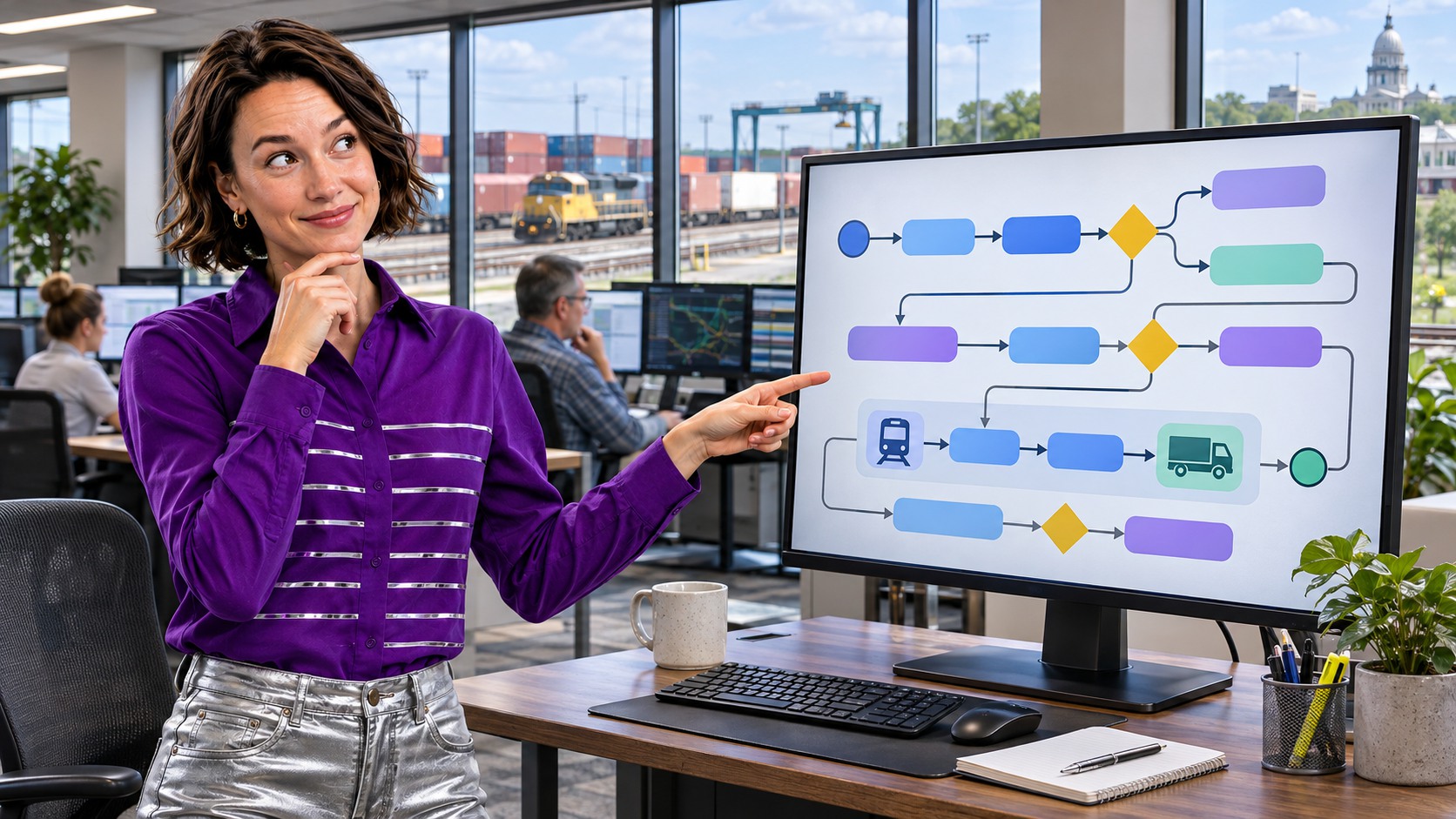
What should Illinois Salesforce consulting and development design?
Understand the handoffs
Follow a container from rail arrival through terminal release, truck appointment, and customer update. Agree which system supplies each status and who tells the shipper about changes.
Case and exception workflow
Use a Salesforce service case to show the problem, its owner, the latest confirmed update, and the next customer message. Do not create a new alert every time an old update arrives again.
Connect transportation updates
Choose how often Salesforce receives information from the transportation and terminal systems. Show failed or late updates for staff to review before an automatic message goes to the shipper.
Access and audit
Give carriers, dispatchers, and account teams appropriate access. Keep a record of the confirmed change and approved customer message so later corrections are understandable.
ZaapIT offers Salesforce implementation and integration services. A project begins by reviewing your systems and agreeing on the work they need to support.
How should migration, testing, and rollout work?
- Check existing records. Compare container moves, rail and truck appointments, customer records, and past service issues. Resolve conflicting or missing information before moving it into Salesforce.
- Back up and move in stages. Keep a safe copy of the source information, test a small sample, then move records in controlled batches. Check that each service issue points to the right container move.
- Test the hard handoffs. Replay a late rail arrival, an earlier event arriving afterward, a canceled appointment, a duplicate feed, and a corrected container reference. Confirm the Case reflects the verified latest event and does not send a second customer update.
- Validate security and operations. Check role permissions, authentication, event-delivery lag, failed-message queues, audit fields, and the manual override path. A staff member must be able to see why an update did not post.
- Pilot one lane or terminal. Agree on acceptance criteria with operations and customer service, review exceptions daily, train owners, and expand only after event reconciliation and communication approvals work as designed. Assign post-launch support for feed failures and data corrections.

Plan Salesforce around your freight handoffs
Discuss how your team receives rail and terminal events, reconciles TMS moves, handles appointment changes, and informs shippers. ZaapIT can scope Salesforce implementation, custom development, integration, migration, and CRM support against the systems you actually use.
Frequently asked questions
Should Salesforce replace an Illinois logistics team’s TMS?
This example keeps the TMS authoritative for moves and appointments. Salesforce coordinates the customer account, service Case, verified exception, owner, and communication history.
How can a Case avoid duplicate rail-to-truck alerts?
Match each incoming update to its container move and check when it happened. Ignore repeated updates and test late arrivals before sending customer messages automatically.
What happens when a terminal event arrives after a customer update?
Route the correction to an exception owner, compare it with the authoritative TMS and terminal records, keep an audit trail, and approve any revised customer message.
What should an intermodal Salesforce pilot verify first?
Start with one lane or terminal and verify event ordering, Case ownership, appointment changes, permissions, retry handling, and reconciliation against the TMS before expanding.
Useful ZaapIT resources
Sources
- Illinois Department of Commerce and Economic Opportunity, Key Industries
- Chicago Metropolitan Agency for Planning, Freight Landscape Summary, October 2025
- University of Illinois NURail, AI-Enabled Autonomous Drayage-Rail Coordination, 2026–27 project
- Salesforce Help, Set Up and Manage Cases
- Salesforce Architects, Integration Patterns
- ZaapIT, official service scope