How Michigan Auto Teams Keep VIN-Linked Recall Contacts Current
Why Do Current VIN-Linked Contacts Matter to Michigan Auto Teams?
In this anonymized composite scenario, a Michigan automotive service team finds a former owner’s Salesforce Contact still marked as the outreach contact for a vehicle after newer sales and service records arrive. The same VIN can legitimately have a history of different owners; a stale current-owner link, not simply a duplicate name, threatens recall outreach and reporting. An illustrative 15,000-row review shows how admins can verify the relationship, preview approved changes in ZaapIT, and retain backup, bulk undo, and restore for supported updates.

Why Owner-Contact Data Goes Stale
NHTSA’s April 2026 recall-completion study describes the precise contact-data problem: manufacturers combine registration-based owner records with dealer contact details, while outdated addresses and aggregator discrepancies can make the current owner and best mailing address uncertain. Vehicles also change hands over time. This is national research, not a measured Michigan or ZaapIT customer result. It matters in Michigan because the state’s 2026 manufacturing workforce analysis identifies automotive as 28.1% of its manufacturing employment; the state has a substantial automotive ecosystem in which accurate vehicle-to-person records support service and recall work. The data grain in the example below is one vehicle VIN-to-current-contact relationship, with previous-owner history retained, not one Contact per vehicle forever.
Use Case: One VIN Points to a Former Owner
A Michigan service organization syncs a dealer sale, an older service history, and an authorized owner-data feed into Salesforce. Its Vehicle record stores a VIN, and a related ownership record designates the contact currently eligible for recall follow-up. One vehicle still points to the prior owner’s Contact after a later transaction. A second Contact is linked through a newer service record, but that alone does not conclusively prove ownership. A report counts the old Contact as reachable and may direct staff to the wrong address.
The admin treats a VIN as a vehicle identifier, not a person identifier. Different Contacts on one VIN can represent valid sequential ownership. Reviewers compare effective dates, source provenance, recent service details, and the organization’s authorized owner data before changing the current-contact designation. Uncertain matches go to a restricted exception queue; they are not silently mailed, merged, or overwritten. Historical owner relationships remain available for audit and service context.
| Evidence | Decision it supports | What it does not prove |
|---|---|---|
| Normalized VIN | Group records for the same vehicle. | The same person still owns it. |
| Sale or transfer date | Order ownership events and flag a likely former owner. | The newest imported row is always authoritative. |
| Approved owner-data source | Confirm which contact may be used for a permitted recall purpose. | Every data source may be shared or reused freely. |
| Service visit or returned mail | Identify a contact or address needing verification. | A visit alone proves legal ownership. |

Why Ordinary Duplicate Checks Are Not Enough
Salesforce Help on duplicate rules explains that rules evaluate matching records, but simultaneous saves are not compared with one another for block-or-alert behavior. More importantly, even a perfectly configured Contact duplicate rule does not decide which person currently owns a vehicle. That is a dated relationship and source-authority question. Standard duplicate rules can help identify possible duplicate Contacts, but the admin must separately validate the VIN relationship, event dates, and permitted outreach fields. Test the actual import path and custom-object logic; do not assume a duplicate alert settles the case.
A Recoverable Review of 15,000 Illustrative Rows
- Baseline: export the illustrative 15,000 vehicle-contact relationship rows with Salesforce IDs, normalized VIN, owner-role status, effective dates, source, address verification status, related service Cases, and last update. Limit personal data to authorized reviewers.
- Profile: group by VIN and identify records marked current in conflict with later approved evidence, returned mail, or a changed contact. Separate true person duplicates from valid former-and-current-owner pairs.
- Approve: a service or recall owner verifies each proposed current-contact change against authorized sources. Preserve prior-owner history and route ambiguous VINs to exception review.
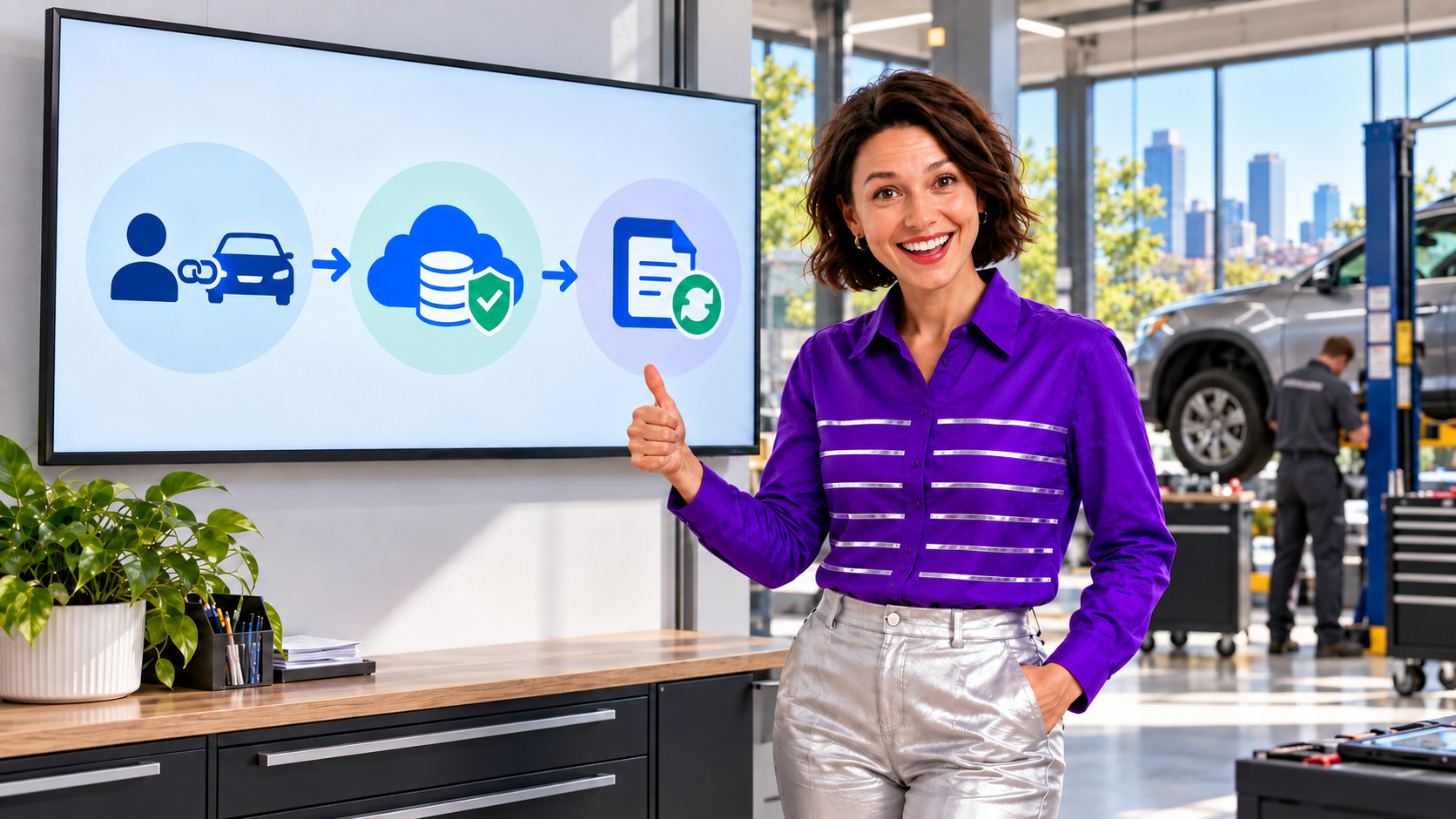
- Preview and back up: preview a small pilot of approved field changes with ZaapIT, back up affected rows, and confirm the supported bulk-undo or restore path for the precise operation and object.
- Run controlled batches: update only approved relationship and address-status fields. Avoid indiscriminate Contact merges, and pause affected outreach until uncertain records are resolved.
- Reconcile and recover: compare counts of one reviewed current contact per eligible VIN, unresolved exceptions, returned-mail flags, and downstream service reports against the baseline. Use bulk undo or restore for supported ZaapIT changes if a mapping fails; repair the upstream feed so the error does not recur.
The 15,000 rows are an illustrative review population, not a claim that every row is changed. ZaapIT’s bulk-update guidance and user guide describe backup and recovery for supported actions; admins should test their exact object and related-record scope before a broad run. The National Safety Council’s Check to Protect campaign offers a separate public way for drivers to check recall status by VIN or plate. It is a consumer-awareness resource, not an owner-data feed for the CRM.
Validation Before Outreach Resumes
The composite team samples changed and unchanged VINs, checks the documented ownership timeline, verifies the authorized contact source, and reconciles Salesforce recall and service reports. A reviewed current-owner designation is distinct from a verified mailing address or communication permission; each has its own status. The team retains before-and-after IDs and test results, and it only resumes outreach under the applicable recall process and data-use permissions. NHTSA’s study itself notes that DMV personal data has limited permissible uses, so the workflow never assumes broad access to it.
Keep Vehicle Contacts Current and Changes Recoverable
Use ZaapIT to profile VIN-linked relationship records, preview approved corrections, and run controlled updates with backup, bulk undo, and restore for supported affected rows.
Frequently Asked Questions
Is a second Contact on one VIN automatically a duplicate?
No. The vehicle may have had different owners over time. Keep historical relationships and verify which Contact is current before changing outreach records.
Can a recent service visit prove current vehicle ownership?
Not by itself. A service visitor could be a family member, driver, or former owner. Compare the visit with authorized ownership evidence and effective dates.
Why might a Salesforce recall report overstate reachable owners?
It can count stale current-contact flags, unverified addresses, or multiple relationship rows for one VIN. Reconcile at the vehicle-and-current-relationship grain and report exceptions separately.
How can admins reverse a mistaken bulk relationship update?
Pilot the exact ZaapIT operation, back up affected rows, and confirm its supported bulk-undo or restore path before scaling. Keep a before-and-after ID map and validate downstream reports after recovery.
Useful ZaapIT Resources
Sources
- NHTSA: Improving Vehicle Safety Recall Completion Rates, April 2026
- Michigan Department of Labor and Economic Opportunity: 2026 Manufacturing Industry Workforce Analysis
- National Safety Council: Check to Protect
- Salesforce Help: Things to Know About Duplicate Rules
- Salesforce Help: Standard Duplicate Rules